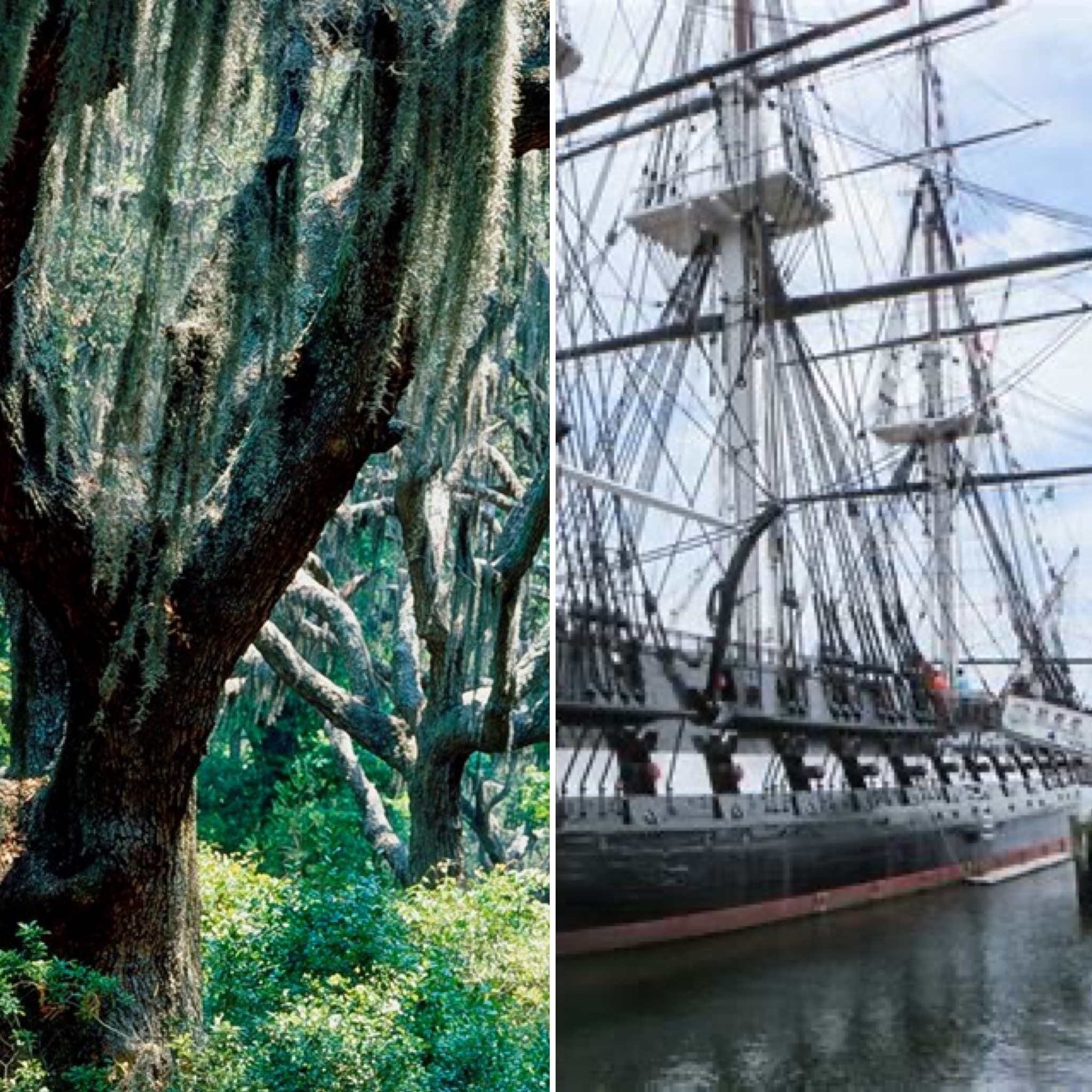


Braving the Ol’ Shawnee Appalachy - Pt 1: The Easy Part
"Her sides are made of iron!" a sailor shouted as British cannonballs bounced off the USS Constitution in 1812. They weren't. They were made of Georgia live oak, and getting that wood nearly killed the men who cut it.
When Congress ordered six new frigates built in 1794, designer Joshua Humphreys wanted them bigger and tougher than any frigate in the world. That meant one tree: the southern live oak.
Live oak is a strange tree. It doesn't grow tall and straight. It grows low and wide, with massive limbs that twist out sideways. That's exactly what shipbuilders wanted. A warship's skeleton is full of curves, the ribs and the braces that hold the decks to the hull. Cut those curves from straight lumber and you slice across the grain and weaken the wood. With live oak, you could find a limb that had already grown into the shape you needed, grain and all. It's also one of the densest, hardest, most rot-resistant woods in North America.
The best stands were on the Georgia coast. So starting in 1794, ...