

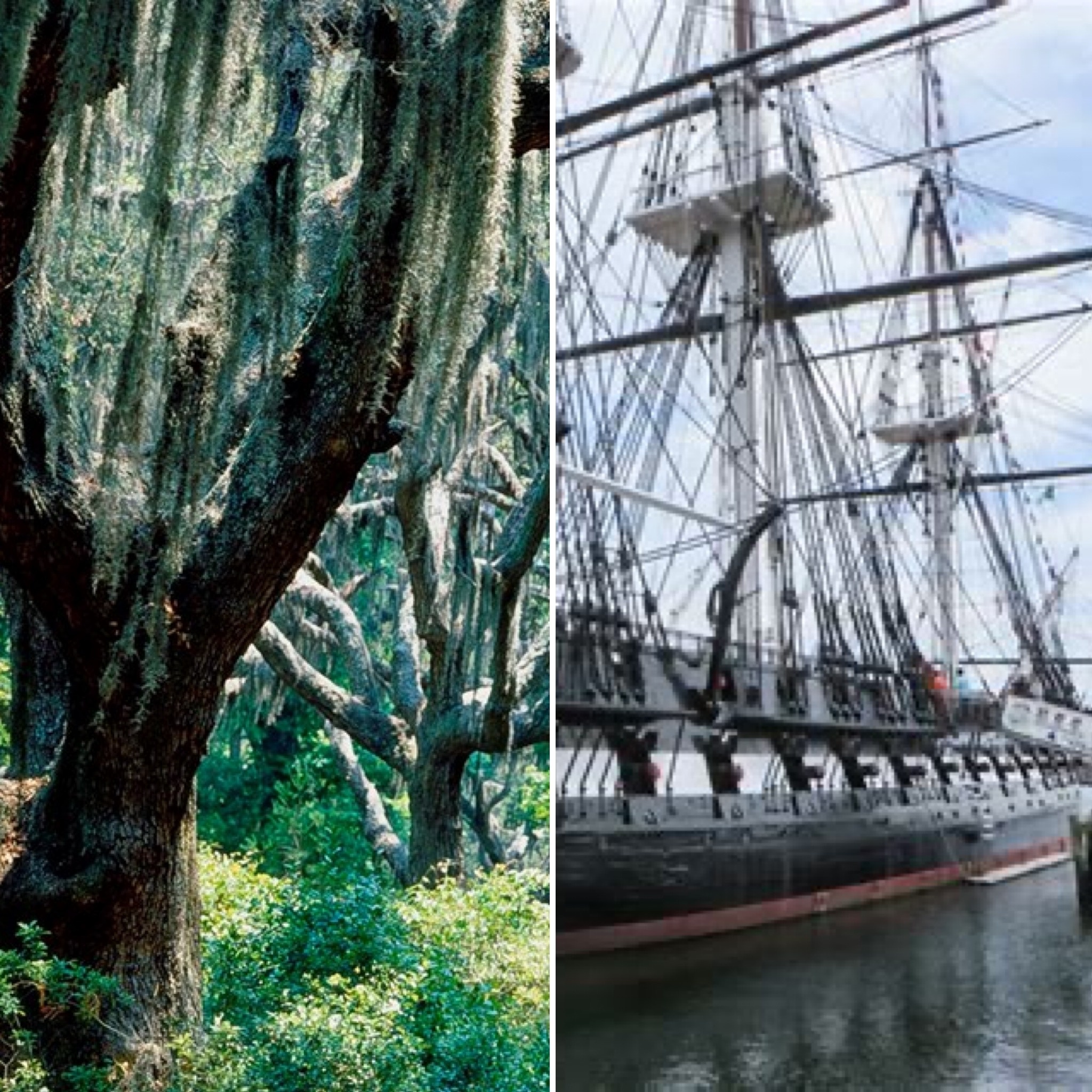
"Her sides are made of iron!" a sailor shouted as British cannonballs bounced off the USS Constitution in 1812. They weren't. They were made of Georgia live oak, and getting that wood nearly killed the men who cut it.
When Congress ordered six new frigates built in 1794, designer Joshua Humphreys wanted them bigger and tougher than any frigate in the world. That meant one tree: the southern live oak.
Live oak is a strange tree. It doesn't grow tall and straight. It grows low and wide, with massive limbs that twist out sideways. That's exactly what shipbuilders wanted. A warship's skeleton is full of curves, the ribs and the braces that hold the decks to the hull. Cut those curves from straight lumber and you slice across the grain and weaken the wood. With live oak, you could find a limb that had already grown into the shape you needed, grain and all. It's also one of the densest, hardest, most rot-resistant woods in North America.
The best stands were on the Georgia coast. So starting in 1794, the government sent crews of New England axmen and shipwrights to St. Simons Island to cut it.
It was brutal. The trees grew in swampy coastal ground. The heat was crushing, it rained constantly, and the mosquitoes carried fever. Men got sick by the dozen and some died. The work fell far behind schedule.
And they couldn't just cut any tree. Shipwrights went into the woods carrying wooden patterns, templates of each rib and brace in the ship, and searched tree by tree for limbs that matched the shapes. The rough timbers were hacked out, hauled to the water, and shipped north to Boston.
There, they were combined with white oak from New England for the keel and planking, and tall white pine for the masts. The finished hull was around two feet thick at the waterline, with live oak ribs packed close together. She launched on Oct 21, 1797.
Fifteen years later, in August 1812, she fought the British frigate HMS Guerriere off Nova Scotia. Sailors watched enemy shot hit her side and drop into the sea. She tore the Guerriere apart in about half an hour, and she's been Old Ironsides ever since.
The Navy understood what it had. In 1828 it set aside a live oak forest near Pensacola, Florida, as a timber reserve for future warships, often called the first federal tree farm. And in 1976 it set aside a grove of white oaks in southern Indiana, named Constitution Grove, for one purpose: repairing her.
She's still afloat in Boston today, the oldest commissioned warship in the world still able to sail. Not because of iron. Because of trees.
Credit: @EchoesofWarYT X Social
Subscribe to The Practical Woodsman on YouTube & Rumble for non-fake, non-pretend, real backcountry wilderness preperation, insights and experience.
While others are playing Robinson Crusoe in their backyards, I show you the realities involved with getting out there for real, and how to stay safe and have fun. It’s work, but it’s rewarding work.
#DIYSpiceKit #WoodsmanSewing #SundayWoodsmanProjects #ThePracticalWoodsman #WonderfulAppalachianCulture


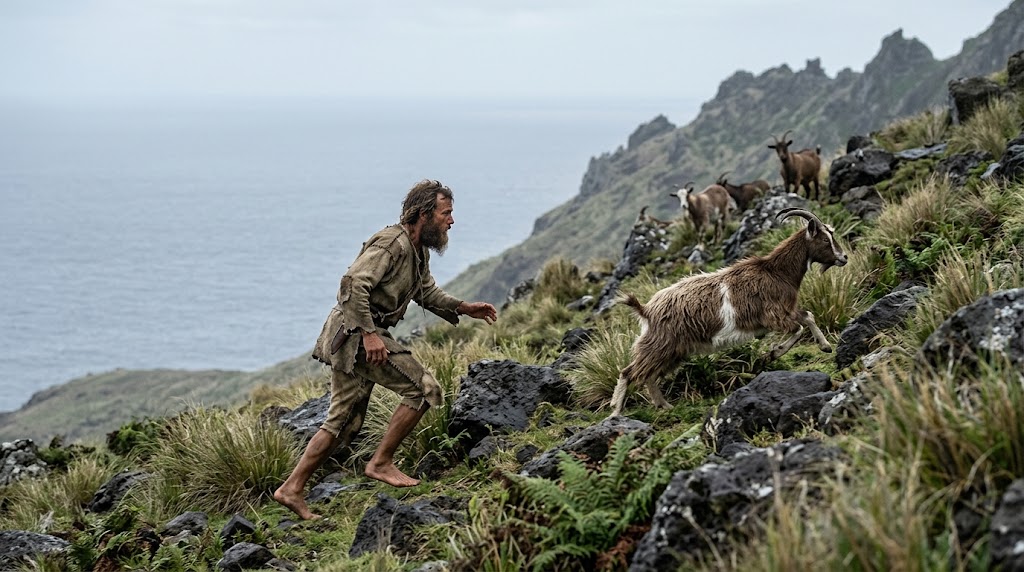
The man Robinson Crusoe was based on spent four years alone on an island in the Pacific, lived almost entirely on goat, and ran so fast by the end that the crew who rescued him could not keep up with him across the hills.
Alexander Selkirk was a shoemaker's son from Fife with a temper, sailing with privateers off Chile in 1704 when he decided the ship was rotten and demanded to be put ashore. The captain obliged. The ship sank a few weeks later. Selkirk was twenty-eight, on an island four hundred miles from land, with a musket, a knife, a pound of powder and a Bible.
The island had goats, left by Spanish sailors a century before. When the powder ran out he learned to run them down barefoot on the mountainsides, catching them by the horns and killing them with the knife. He counted five hundred. He ate their meat, drank their milk, made his clothes from their skins, and when he was lame he had already crippled a few kids so he would always have one he could catch.
When Captain Woodes Rogers ...