

Two hundred years ago, a squirrel might've traveled for dozens of miles through Tennessee's forests without ever touching the ground.
Folk lore even claimed a squirrel could travel from the Atlantic to the Mississippi without touching the dirt floor.
Among those forests stood the American chestnut, growing up to 100 feet tall with a trunk diameter of 5-10 feet.
It was one of the most common and important trees in the eastern United States—feeding wildlife, feeding people, and shaping entire ecosystems.
Then a fungal blight arrived.
Within a few decades, somewhere between 3-4 billion trees were gone.
Today, most people in Tennessee couldn't recognize a mature American chestnut in a photo.
That's a remarkable thing when you consider how common the tree once was.


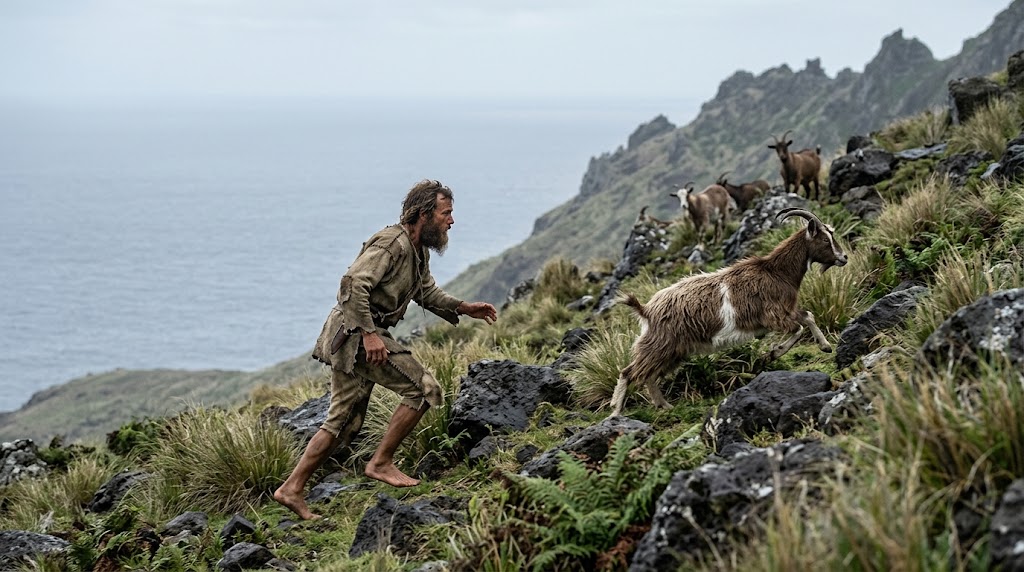
The man Robinson Crusoe was based on spent four years alone on an island in the Pacific, lived almost entirely on goat, and ran so fast by the end that the crew who rescued him could not keep up with him across the hills.
Alexander Selkirk was a shoemaker's son from Fife with a temper, sailing with privateers off Chile in 1704 when he decided the ship was rotten and demanded to be put ashore. The captain obliged. The ship sank a few weeks later. Selkirk was twenty-eight, on an island four hundred miles from land, with a musket, a knife, a pound of powder and a Bible.
The island had goats, left by Spanish sailors a century before. When the powder ran out he learned to run them down barefoot on the mountainsides, catching them by the horns and killing them with the knife. He counted five hundred. He ate their meat, drank their milk, made his clothes from their skins, and when he was lame he had already crippled a few kids so he would always have one he could catch.
When Captain Woodes Rogers ...