

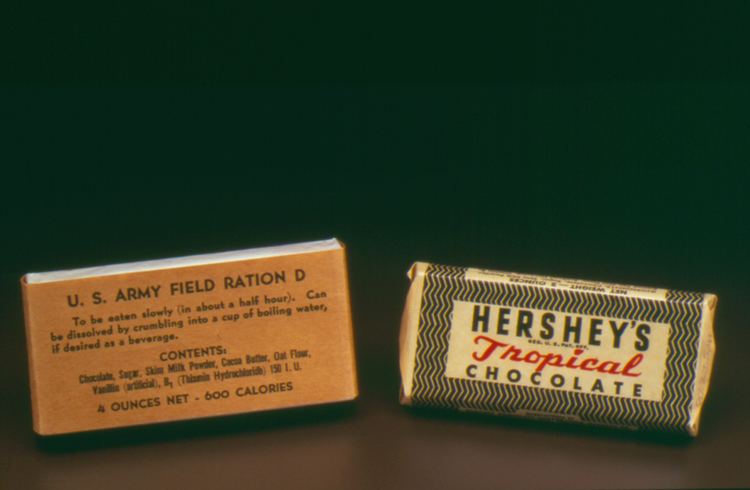
In 1937, the United States Army approached Hershey's Chocolate with one of the strangest product briefs in food history.
They wanted a chocolate bar, but they needed it to taste, in the words of the Army Quartermaster himself, "only a little better than a boiled potato."
Captain Paul Logan of the US Army Quartermaster General's office sat down with Hershey's chief chemist Sam Hinkle and laid out four requirements for what would become the Field Ration D bar. It had to weigh four ounces. It had to be high in energy. It had to withstand high temperatures without melting. And it absolutely could not taste good. The Army's logic was straightforward: if the emergency ration chocolate was delicious, soldiers would eat it whenever they wanted rather than saving it for genuine emergencies. The solution was to engineer the palatability out of it on purpose.
Hinkle and his team spent months developing the formula. They reduced the sugar dramatically. They increased the chocolate liquor to make it more bitter. They added oat flour, which created a dense, dry texture with an unpleasant aftertaste. The mixture was so thick it could not be poured into molds at all. Every single bar had to be pressed in by hand. The factory workers at Hershey's reportedly hated making them. The resulting product delivered 600 calories in a 4-ounce brick that soldiers described as nearly impossible to bite into without a knife. The instructions recommended eating the bar slowly over the course of thirty minutes, or dissolving it in water as a drink. Most soldiers said they would rather have had the boiled potato.
The Army ordered 90,000 bars for field testing in 1937. They worked. By the time the United States entered the war in 1941 Hershey's was producing the D ration at extraordinary scale. Before the war ended, the company had produced more than three billion bars. The soldiers nicknamed them Germany's secret weapon, partly because of their effect on digestive systems, partly because they were so bad that trading them to civilians who had never encountered them was considered something of a scam.
The D ration bar also survived in the most literal sense possible. In 1943 Louis Zamperini, an Olympic distance runner and Army Air Corps lieutenant, survived 47 days adrift on a life raft in the Pacific Ocean after his aircraft crashed, sustained in part by the few D ration bars he had on board. His story is the subject of Laura Hillenbrand's 2010 book Unbroken.
Hershey produced a second bar for the Pacific Theater in 1943 called the Tropical Chocolate Bar, designed to withstand temperatures of 120 degrees Fahrenheit. It tasted slightly better than the D ration and was immediately nicknamed by soldiers the dysentery bar, because it was the only thing they could tolerate when they had dysentery. By the time the war ended Hershey had received five Army-Navy Excellence in Production awards. The chocolate industry had argued successfully that candy was an essential war material rather than a luxury, and won. The precedent that established chocolate as a mass market, everyday food for ordinary Americans rather than an occasional luxury was set partly in the factory lines at Hershey, Pennsylvania between 1937 and 1945.
M&Ms were also invented during this period, specifically because Forrest Mars wanted to create chocolate that could be included in military rations without melting. The hard candy shell was the solution to exactly the same problem Hershey was trying to solve with the D ration bar. Mars got an exclusive military contract and M&Ms went to war first before they went to the general public.
The entire modern American candy industry has roots in the specific logistical problems of feeding soldiers in extreme conditions, where survival over taste was a must.
© Eats History
…the myth, the legend.
#AppalachianLegend #AuntRuby #BackwoodsBars
#ThePracticalWoodsman #AppalachianCampfireStories
WARNING: This is a brief video of two people dying. The wife thought she was taking a picture of the event, but it was actually a video.
I have been in these intimate, private circumstances many times before with my own brain.

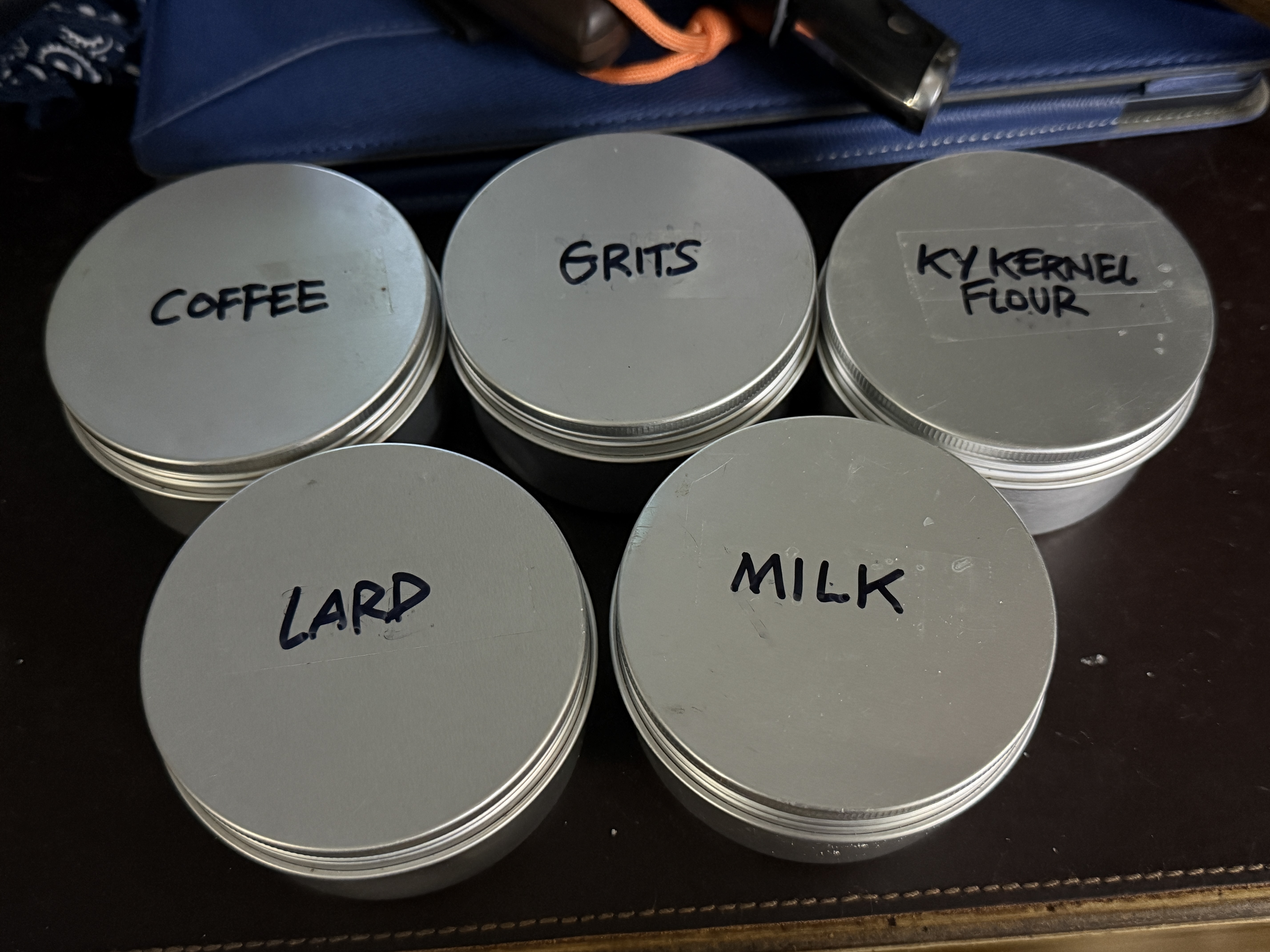
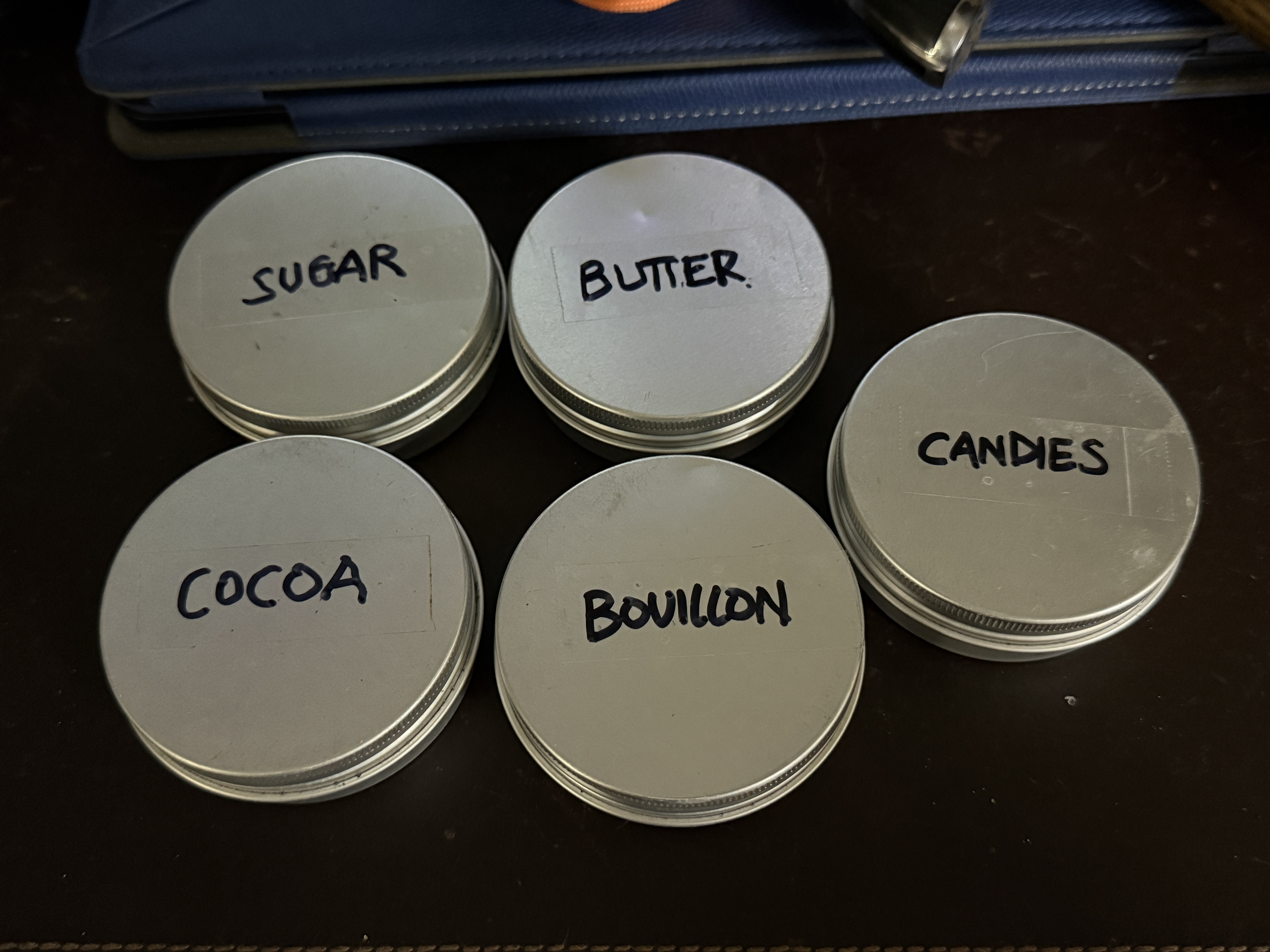
Nothin’ is better than round, uniform tins for hauling certain things. I’m really fond of them because they stack neatly and can save quite a bit on space. I get them off Amazon in two different sizes at a low price - a small, snuff-size can, and a larger can.
The only real drawback about them is that they can get beat up fairly easily, because they’re made out of really light aluminum. But for their low cost, I reckon it’s no big deal, since they’re easy to replace.